Change Your Perspective with Art and Live in the Present
Change your perspective when you feel overwhelmed. There is always a solution, and sometimes, by looking at situations differently you can find answers. Art is a coping creative process that helps you evaluate and visualize circumstances objectively. Nourish your psychological well-being with artistic activities.
Change Your Perspective
When you change your perspective towards suffering you can judge it better. How awful is the situation when you look at it from someone else’s perspective? Also, consider how terrible the situation is if you take a broader perspective. For example, does the issue affect you in a long term? Or does it have a consequence on your well-being?
It’s not about ignoring what is in front of you, is accepting it with courage. Nothing lasts forever and all troubles in life might be smaller than you think if you put them in perspective. Remember what the stoics have taught us, that we can only control our minds. Also, we must cultivate our virtue and morality. As we train our bodies, so we should exercise our minds daily.
It’s in keeping with Nature to show our friends affection and to celebrate their advancement, as if it were our very own. For if we don’t do this, virtue, which is strengthened only by exercising our perceptions, will no longer endure in us.
Seneca

Community and Individuality
The way to live in this world is with virtue and decency. Why? Because we live with other people. Others not only go along with us but can help us live with a broader perspective. People suffer, and sometimes because of us. You can use that perspective for your benefit. In other words, you can always rely on the feeling that you are not alone. First, by thinking about others. Second, by feeling that others are empathic because they also have similar feelings.
This is a move we encounter repeatedly in the arts: other people have had the same sorrows and troubles that we have; it isn’t that they don’t matter or that we shouldn’t have them or that they aren’t worth bothering about. What counts is how we perceive them.
Alain de Botton

Art is More Than a Hobby
Do we need external resources to train our minds, or can we do it being alone without anything else? For example, through a pandemic what is the best way to live through isolation?
I usually keep my mind occupied with books, music, movies, series, and art. Do you think that is the best way to cope with isolation? I think it’s important to look for hobbies where our minds become wiser. Activities where they don’t rely on someone else to make it happen. How can we train our minds when being alone?
Also, why do we need social interaction so much? And because we do, what activities might help us connect with humans without being close to them? I wouldn’t rely on virtual encounters because they tend to leave me drained and sometimes with a headache.

Art is capable of connecting us with other people by the way we express our feelings. Also, as mentioned before, art shows us that others also suffer. This not only helps us train our minds to be more resilient but also to change our perspective of what truly matters. For example, when feeling desperate through a pandemic because we can’t go out, what if we consider that others actually can’t eat. Others lost their jobs because of the situation. When we ponder about life-threatening situations, our lack of social interaction is more tolerable. A change of perspective makes everything more tolerable.
Also, remember that art increases the release of dopamine from your brain. Low levels of dopamine are linked to depression. And, it turns out that dopamine levels play an important role in how you perceive the world.
Art to Change Your Perspective
When you paint or draw a scenario you are thinking of it differently. As an example, rough neighborhoods in Brazil, called favelas, have a reputation for being dangerous. By painting the walls with colors and with beautiful landscapes, the violence decreased.

In Bogota Colombia, a whole neighborhood was painted so that when seen from afar it looks like a butterfly. Also, there are many murals around the city painted by local artists. This gives people a perspective of belonging. They like going to their home, and they take care of their surroundings because they want to keep them beautiful. It is easy to see how you can behave with the objects that surround you. If you take care of the place where you live or work and use art as a form to shift a perspective, you can be able to observe your obligations from a different point of view.

Art: A Tool That Can Help Us Be More Sensible
Art is a form of consolation. We can find consolation by expressing and observing. When we put situations in perspective we may find a way to cope with our troubles. How can art help us do that? By looking at beautiful pieces that reflect a person’s sorrows. Also, by expressing your own and contemplating what they mean.
Just as you train your body to be fit, so you need to train your mind to be in shape. The sum of every day comes to be your life. The routines you develop come to shape the way you are. That is why art can help you gain perspective over your life.
Vanishing Point to Change Your Perspective
A vanishing point is a point of a perspective drawing where lines converge. These lines are parallel and the representation is used to recreate two-dimensional perspective drawings of three-dimensional spaces. It is a point where everything tends to vanish.

This is a creative activity where you draw anything that you want to change your perspective on. For this, use the vanishing point as an extremity of a circumstance. For example, draw the past on the vanishing point. Accordingly, draw other events of your life away from that point. This will help you realize that you can’t change your past. Also, that we tend to idealize our past and that we shouldn’t trust all of your memories.
If you want, you can draw quite the contrary. The vanishing point is where you want to go. It represents that point in the future that you can build up with optimism. When you change your perspective and build habits with optimistic thoughts, you can accept situations as they happen. You start to value the way you live because that is the way you have created your life to be.
Scale Drawing
What is this problem that you are facing right now? How can you put it in perspective of everything that you have lived? Of everything that you have survived?

When we think of everything we have lived, we can conclude that we are capable of managing difficulties. We are far more prepared than what we give ourselves credit for. We can cope far better than we think. Also, we realize that most of our problems are nothing if we visualize the universe. What is going on now in the world? What is our life compared to everything else?
It is nothing at all. We are just here to survive, and most of what we do doesn’t affect the world at all. This helps us change our perspective of what is important. Choose wisely and observe what you are prioritizing. Every choice we make builds up our lives. Remember, how we spend every day makes up our lives. By drawing, you can visualize what it is that you are prioritizing. As a consequence, you can change your perspective of what you value the most.

Draw Your Virtues
Draw what you like about you or just draw what you like. Also, paint with your favorite color. A little goes a long way… What we are is what we do every day. Don’t think about enjoying everything you do, but cultivating what is good for you. This art routine will empower you. This happens because you are constantly remembering your strengths and embracing them to create.

It is about cultivating your powers. Don’t focus on what you wish you had, focus on what you have. Cherish your personality and don’t expect to be someone else. Also, think about how you can reprogram or change your perspective with positive affirmations. It is proven that you change your subconscious, thus becoming more positive about your life.
Just Let Go to Change Your Perspective
I find this practice to be the most rewarding. Letting thoughts go and accepting them just as they are. When I am stressed I tend to think a lot about how some situations are difficult. I keep talking to myself that I am not going to have enough time to do some obligations. The opposite is also quite stressful. Thinking about solutions and how some situations can be different if I do this or that. That constant thinking and speculating is what is overwhelming. The feeling of being in charge of everything is exhausting. Sometimes all we have to do is let go.

Let go of controlling situations and thinking of solutions to everything. I am stressed about thinking negatively, I am going to think positively. Think, think, think. What if we let go and accept circumstances as they come? Again, we shape our lives by our daily actions. Drawing is a form of acceptance.
What would happen if we drew every day? How can we change our mood by perceiving objects and people around us? How can we use the objects that surround us as sources of inspiration? Consider, for example, drawing some items that you like. Also, you can draw with different mediums and materials.
Observe Paintings
In this article, Alain de Botton observes paintings and makes analogies with our lives. We feel part of a community when we discover artists that express sorrow. We all feel sorrow, is part of being human. Seeing that all of us feel it and that we can express it makes us feel elevated. It is because we feel part of a group and because it constitutes a source of inspiration. When we discover that we as humans feel desperate and that we all do, we feel life less of a burden. After all, we didn’t choose to be here. It is not our obligation to be happy all the time. We only have one obligation and that is to die.
It is not pessimistic, it is realistic, and it can take a burden out of your hands. By changing the perspective of what life is supposed to be you can live free of choosing how you want to live. It is precious to live in the moment. When we are focused only on what is in front of us is liberating.
Another great example is to surround yourself with wisdom. You can be physically alone, but psychologically you can choose how you want to be. Again, it is about perception. We can admire paintings that reflect our state of mind. It is about feeling understood and knowing that there are people that share our sorrows.

How can art give us hope? Rather than needing a stern dose of disenchantment, we’re more likely to require art-tools that can feed and sustain our beleaguered optimism.
Alain de Botton
Art to Express and Art to Feel Understood
Any activity that you choose, whether it is to draw or observe, enhance it. It is about making the best of what we have. It is about seizing the best perspective there is for us.
A Self Inspection Analysis With This Exciting Art Routine
Self-inspection is to take care of oneself by observing our own feelings. It has many psychological benefits. Amongst the most important are control of mood swings and improved well-being. The idea is to dedicate time to ourselves to notice our emotions.
There are many ways to self-inspect. The importance is to do it from a neutral standpoint. That is where art activities become tremendously valuable. Art is a great tool to express, without being judgmental. It is a form of expression free from labels and restrains.
Self Care
Taking care of oneself means to develop habits that enhance our well-being. One of the most important ones is to dedicate time to notice how we feel. Especially, notice those that lower our stress levels and boost happiness or a tranquil state of mind.
Acknowledging how we feel helps us find solutions for what bothers us. It is not healthy to suppress our emotions. It is healthy to observe them, to come up with a clear definition to find a path to work on.
Why Art?
Art is a medium where you put your feelings before your thoughts. You get to express without constraints. Expressing without the need for words is liberating. There are no preconditions and all feelings are valid.
Taking care of our emotions is important as we do with our physical bodies. This way, we develop a dialogue between our emotions and the outside world. Using art can make us have a better glimpse of our feelings. Some situations start to make sense once we discover why we feel a certain way.

What goes on in our heads when we make art? We feel a rush of endorphins and that is good for our well-being.
Apart from everything mentioned before, art enhances problem-solving skills. This happens because art helps us develop our creative skills. Having more imagination broadens up our chances of finding solutions.
Develop Creativity for Self-Inspection
The fact that we develop something new visually, is a tremendous practice for our imagination and our perceptive skills. Visual representations help us navigate our lives more practically.
When we draw or paint, we stop focusing on what makes us desperate or depressed and we have a wider perspective of our lives. Having a bad moment doesn’t look so bad when we put it into perspective.
For example, if you draw what is bothering you, you can get rid of the feeling of despair. Everyone is capable of self-expression. That is why art is a great tool for self-inspection because we all can create some visuals.
Grab Your Tools
Choose an inspiring blank notebook, something to draw or write with, and begin. There are many colors to choose from. Also, just using ink is quite inspiring.
Look for ways to engage completely in the experience. You might want to add some music or play with materials that you can touch. For example, watercolors, clay, or wet markers that you can blur with your fingers.
Have fun and explore the tools you have at home. You can even glue visuals from magazines or other fun activities you remember doing when you were a child.
Don’t think that you need to finish a project. It’s about experimenting and using what you have at hand to express. There is no wrong answer here, it is absolutely valid to do whatever you choose to do. Stop or continue whenever you feel like it.

Where to Start
Start by breathing and observing how you feel, then get it all out. Many questions trigger our soul to speak. Also, just by tuning into our breathing and making a pause during the day is quite beneficial.
Often, by taking a pause, one can observe better what is going on. This will break the fear of a blank page. Simply by acknowledging what we are feeling and thinking of it a source of inspiration.
Also, think of it as a way of being heard. Instead of shouting and hurting someone else, scribble. A simple but very rewarding practice is to wish the best for the people that sometimes hurt us. Draw hearts or an object that represents forgiveness.
Answer Some Questions
These are some questions that might help you have a broader observation about yourself:
- How do I feel?
- What is positive in my life?
- What am I grateful for?
- What brings me peace?
- What is my mantra?
- What scares me?
- How do I find inspiration?
Habit of Self-Inspection
There are many ways that art helps us express. The idea is to make this art activity a habit. That is because it is important to engage in the creation, rather than in the outcome. The benefits come from doing art, rather than from the results.
I learned by reading this book that a habit is composed of a trigger, a routine, and a reward. For creating a habit of self-inspection by using an art routine you can do the following:
- The trigger: commit to a time that works. Look for something that you already do automatically, like washing your teeth before going to bed. As little as 10 minutes a day goes a long way! The trigger could be right after you wake up, with your morning coffee, or after you have washed your teeth. These are all triggers that remind us to grab our notebook and begin expressing.
- The routine: drawing.
- The reward: the endorphins in your brain thanks to art. A beautiful creation. A present for someone. A piece of decoration for your home.
Don’t expect to want every day to engage in a self-inspection practice. You may not feel like it, and that is ok. Your creativity might also be better some days than others. The value comes from showing up every day. The creative juices will flow. Because the brain is receiving a reward, showing up will trigger your artistic persona.
Preventive Health by Self-Inspection
The habit of self-inspection with an art routine is a form of preventive health. Before feeling overwhelmed with stress or with the burden of everyday life, we can address our troubles by observing them from a neutral point of view.
Art-as-therapy is naturally preventative because it employs therapeutic creativity in the service of sustainable wellbeing and not just as a means to a finite end.
Thomas Shortliffe
Drawing is different than writing in a journal because words are sometimes not enough to express deep inner feelings. For example, the feeling of being nervous. There are a lot of words to describe this feeling. Anxious, nervous, stressed, preoccupied, etc. Why if we don’t think any of these words is a true definition of our feelings? Why if it is a combination of anxiety and happiness?
It could be, that because there are no words to describe the mix of feelings, we tend to label what we are feeling. Instead, when we draw, we give our soul space to feel. Drawing is a form of meditation. When we draw we focus on what is in front of us. Our breathing rhythm changes, and we get more in touch with our feelings.
Example of Self-Inspection
Here is an example. I grabbed my notebook at night and I was feeling angry. I started scribbling hard and was concentrating more on the ink and I began breathing differently. My perspective towards my feeling of anger changed completely. I was able to observe my anger as an outside spectator. Where was my anger coming from?
I was sure I was angry, that was the word I used to define my feelings. The truth was, that I was disappointed. As a consequence, I was angry, but I was disappointed with the government (well, who isn’t?). I know where my limits are, and I know how far I can do something about it. After all, why suffer when it doesn’t depend on you?
The Artistic Methods for Self-Inspection
1. Create a Pattern
Make a repetition of a figure or something that you like. Every day add another shape to a big creation. Or, begin a new page with your composition.
When you are adding bits here and there to your composition, you can forget about what you should or have to be drawing. Instead, you focus on what you feel.

Start with something that feels good to you. The importance here is to focus on a process, rather than on the results. Look for objects or expressions that engage your creative mind. When you create a pattern, you can create new ways to communicate.
Every day is different, and you will feel that every occurrence of your pattern is different. One day it could look darker, or stronger than another day. The beauty of this activity is to see how you change throughout each day.
2. Draw the Same Object Every Day
As with the art activity of the patterns, drawing the same object helps you have a plan to explore your feelings. You don’t have to come up with ideas for creating, rather you can self-inspect your soul.
I have a plant on my desk that I tend to draw every day. It is a constant reminder to draw and breathe while doing it. I don’t waste time looking for something to draw. I have it at hand and it is a great way to start my creative flow.

3. Draw Your Emotions
This one I love it. At first, it was homework from my teacher. Now, it has become a way to inspect the way I feel. Usually, if I am angry, I want to sketch hard. If I am gloomy I tend to draw lines going downwards, and if I am happy they go up!

4. Play with Colors
There are several ways you can inspect your feelings with colors. You can do the following:
- Color code your emotions.
- Pick the color according to the day.
- Use the colors according to your mood.
Just as you do it with your outfit or your makeup, you can do the same with the colors. For example, in autumn you can choose brownish colors, and in summer go with yellow. Also, if you have a special occasion and you are wearing black, you can paint with ink.
This will help you dig into what you are feeling because you get in tune with your surroundings. For example, if it is raining outside you might want to use blue. By being in tune with your surroundings you could find some inspiration. Also, carrying a new color is like having a new toy. You never know where the inspiration might come from. Drawing anywhere you are is an advantage for self-inspection.
Also, you can try to engage in this exciting art class. It is a way to create a combination of colors by subtraction. Later on, you add faces to a collage of colors and shapes. You can create a mix of colors one day, and add faces according to your mood. It is a way of self-inspection because you get to decide how the expression of the faces mimic your feelings. Also, the colors have a lot of hidden meanings.

What To Expect
At first, you might forget that you have a journal that you can use to express your emotions. As time passes and you start to develop the habit, you look forward to it. If you carry a notebook you may want to make annotations of thoughts that pop into your mind. Not only will you observe the way you are feeling, but you might develop a way to acknowledge your feelings.
A clear understanding of ourselves is the right path to self-awareness. Knowing what we are, what we like and dislike makes us more in control of our feelings and thoughts. After all, our priority should be to feel tranquil and happy.
Isn’t that what we all search in the end? This self-inspection practice by using art is the right path for a more meaningful and mindful life. Life with art.
Develop a Healthy Ego by Drawing a Character In Simple Scenarios
This drawing activity helps you visualize if you have a healthy ego. A healthy ego is one that is capable of judging our decisions based on the environment and our desires. This to prioritize our well being. The activity of drawing a character in different scenarios is a powerful technique of visualization. It puts our rational part in tune with our desires. Through this activity, you can judge whether or not you have a healthy ego.
What is ego?
A simple explanation of ego is the way you see yourself. It is the way you would describe yourself to you.
Freud was one of the first people to define the ego. He stated that the ego is the moderator between our unconscious and society. In other words, the ego helps us behave by our instincts and that which society demands from us. The ego is in charge of judging our decisions to adapt to the environment we live in.
For Buddhism, the ego is the mental creation of yourself to guide you through the world. Consequently, it is the way you construct your mind to live.

The importance of a healthy ego
A healthy ego is following your well being. An unhealthy ego either tries to please others or is blinded by personal needs. You believe appearances are important. For example, you think that appearing strong in front of others matters. Also, an unhealthy ego operates by what society considers to be success or happiness. A healthy ego avoids looking for attributes that depend on how others see you.
I’m not saying you should disconnect yourself from society. Nor to drive away from commodities or money. The importance here is to notice how your life navigates. Are you pleasing society’s standards or your personal desires? Neglecting or depending on any of the two is unhealthy.
An Example: A Pandemic
Some people prioritize their instincts without considering the environment. A person who neglects the advice from doctors because he believes he knows more. His ego depends on his wisdom and to doubt everyone else’s. He listens way more to his instinct and doesn’t think about a common benefit. For instance, the use of face masks. It is controversial and wearing one is an altruistic action. Some people fail to realize that, and don’t comprehend that sometimes you have to make sacrifices for everyone’s welfare.
People who prioritize the environment without considering their needs. For example, a person that is social distancing and doesn’t work on his mental health. Depriving ourselves to go outside is not an easy task and we should watch our mental health. It is beneficial to keep a social distance when there’s a pandemic, but it’s harmful not to acknowledge our feelings. We have needs, for example, to express and adapt our mental health to a new situation.

Don’t Suppress Your Ego
The concept of trying to get rid of our ego is not healthy. After all, we live in a society and we need a mediator with our unconscious. Trying to get rid of our ego would be like having a damaged prefrontal cortex. This part of the brain is in charge of making decisions and mediating our social behavior. Without our ego, we wouldn’t judge whether or not some choices affect us.
It is healthy to have a mediator that gives us an objective input of the world’s situation. For example, to help us navigate through earning a living. We need to survive and we need to have an input on how to adapt to the external circumstances. We need to be able to judge when those external circumstances may harm us. Also, we need to be able to judge when we are harming ourselves by only listening to our instincts.
It is not about suppressing our feelings and acting like everything is fine. To clarify, it is about acknowledging what we feel and what is good for us according to the environment. Don’t confuse having a healthy ego with being egocentric. The latter is self-seeking and suppresses others’ feelings. The contrary would be to please everybody else and forget about our needs. A healthy ego is about finding that balance. It is about knowing when to adapt, and when to listen to your instinct.

How can you tell if your ego is healthy or not?
On a personal note, I remembered the moment I realized I didn’t have a healthy ego doing this activity. It was like the chapter on How I Met Your Mother. You hear glass shattering once you realize something was there the whole time.
I missed my old job and I thought I was feeling unfulfilled professionally. I came to realize that I really liked it not because I was growing professionally, or I enjoyed the job. Subconsciously, I enjoyed the approbation and I needed it to feel good about myself. My ego was fed by external admiration. My unhealthy ego was feeding me information about my environment and was considering that admiration to be important.
To a healthy ego, it wouldn’t matter how other people looked at me. A healthy ego is in the capacity of showing the information without adding a tone to it. For instance, not caring about others’ compliments. After all, I was doing my job and at some level, I was learning something from that place.
It’s Just a Job
That is the importance of a job. Not the fact that we have one, or that people admire us. It is important because of what we can learn from it. A job shouldn’t define us. A healthy ego is in the capacity of adapting and observing the job for what it is. It is a place to earn a living and learn. It is not a definition of who we are.
When you have a healthy ego, you take the information and you evaluate it. That information doesn’t come up with added emotional information. You don’t depend on that information to function. It is just a variable in your life. For example, you shouldn’t need the sun to shine for you to be happy. The information is useful to know what kind of clothes you need to wear. It is not to define how you are going to feel throughout the day.

How to keep a healthy ego?
It is important to reflect on our lives. Evaluate why you behave a certain way and what are your priorities. If you notice that you put a tone to a certain factor, then you need to evaluate it. Ask yourself questions and observe your emotions.
For example, evaluate when the situations are real and when you are imagining outcomes to feed your self-perception. Also, evaluate how you define yourself. If you think you depend on an external factor you should evaluate your ego. Remember, that it is all about a balance between your environment and your instincts. Possessions don’t define you, nor your talents. The way you navigate life defines you. Also, your thoughts and actions.

An unhealthy ego cares about what you can judge visually. That is to say, the kind of job you have, the clothes you wear, and how popular and admirable you are. What about what is inside? Can you judge that easily? Does your ego care about how thoughtful, tranquil, and observant you are?
If you really were observant and perceptive would your unhealthy ego still exist? If you could interpret situations, nurture yourself with kindness would your unhealthy ego still be present? Can you suppress an unhealthy ego with wisdom? Can you make an unhealthy ego, healthy by taking part in artistic activities?
The Drawing Activity
With this drawing activity, you would be able to judge the way you are telling yourself who you are. That is to say, to observe how you construct and perceive who you are. With this activity, you would judge your ego towards various scenarios of your life.
The idea is to observe your ego as if you were someone else. First, draw a character and later imagine how you would want it to be. Wish the best for that character and nurture it with what you consider is important. That is, to have the qualities you consider a good person should have.
Physical Traits
When you draw your physical image you are going to perceive if you like or dislike something about you. Above all, the importance of this step is to judge where that perception of beauty is coming from. We have a very big preconception thanks to the fashion and entertainment industry of what beauty should be. Here you can find an interesting post on how to free yourself a bit from that constant media attack. Consider how that definition of beautiful has changed throughout time.
We all admire nature when we see something peculiar. We value more a rare bird than the pigeons we see on the street. Why we have to be so harsh on our body image and condemn that which the industry finds unacceptable? Think about how we despise physical traits that show the passing of time such as wrinkles. Why do we hate to have a bit or a lot of belly fat? After all, that was what was considered beautiful in the renaissance.

You Make the Rules
The importance of this activity for a healthy ego is to analyze how important your physical traits are to you. It is not healthy to mimic that which the industry finds acceptable. Also, it is not healthy to be proud of being the contrary. You should observe how important is to you to appear the same or completely opposite. Most importantly, you should analyze who you are trying to please. Do you like to take care of yourself and feel pretty for you, or for someone else? Also, do you feel strong because of your physical appearance?
Would you like your character to depend on its physical appearance to fight against the world? Is it better to give your character an inner strength or a superficial beauty? Would you like your character to be constantly aware of the way it looks?
The importance here is to notice why you value physical appearance. Is it because of you, or are you pleasing someone else?
The Way you Use Your Time
Now that you have created a visual character imagine how you want to educate it. Consider human instincts such as fear, stress, depression, and anxiety. They are imperative for our survival, but they need to be observed so that they don’t rule our lives.
Your character has instincts since birth. What activities do you think would help it survive without a lack or magnification of them?
Read here to see how our instincts need to be noticed for us to adapt. For example, consider how your character should behave according to our current environmental problems. To neglect that is both to ignore the environment as well as our survival instincts. An unhealthy ego prioritizes money over climate change. Think about what information you have gathered from this, and how you are going to behave accordingly.

The Scenarios
With the physical strength and the education you provided for your character it is time to put it into action. Do you think the traits you designed are a good start to put it out in the world?
That is to say, imagine your character living and surviving with the characteristics you designed. Do you think the time your character spends reading is enough to make good decisions? Does your character evaluate human behavior and its relationship with other people? What about its nutrition?
Consider how these factors play an important role for your character to survive. Analyze how you would like it to live to be well informed about possible scenarios throughout its life.
Your Work
Place your character in your working environment. For instance, visualize how it would react to your colleagues and the environment in the office. Are there bullies in your office? Are they harming your character? If not, do you think it’s wise to send your character into battle? It would be wise to teach your character how to survive without having to lose its strength over an argument.
Don’t let your character be driven by what society considers success. Your character could have more possessions, but would it be wise to jeopardize its sanity? Do you think it is good for your character to have more money by losing time to nurture its soul? Don’t let your character have an unhealthy ego by considering its status on a professional level over its well being.

Your Home
In this activity on developing a healthy ego, place your character at home. If you live with someone else, how is your character’s relationship with them? Does your character depend on them to be happy or does it have a healthy relationship of companionship and respect?
Observe how your character behaves in your home. Does it feel comfort and understanding, or does it feel threatened or distant? Is the environment safe and comfortable? You could make some subtle or big changes, to help your character feel more pleasant at home.

Your Personal Development
You gave your character some initial education. How would you nourish that which you considered important in the beginning? Do you feel that your character needs more personal development by engaging for example in some hobbies? For this, consider obviously giving it some art time. Its benefits are invaluable and you would be doing it a big favor to nurture its soul and mind.
Also, think about the benefits of reading. Let your character grow professionally and personally by choosing some good books for it.

It’s all About Observation
It is time to acknowledge the fact that the character is you. The character was your ego playing in different situations. You evaluated how your ego behaved in different situations. Did you like what you saw? Do you think you have a healthy ego?
This activity to develop a healthy ego could be a good entry for your journal. Consider keeping a notebook to analyze and observe your life. Don’t forget that is all about how much balance you have between your environment and your instincts. Don’t forget about the importance of this activity because of art benefits.
For this, you need to be constantly observing and nurturing your life. This, to shape the way you want your life to be.
If you enjoyed the activity and want to learn more about creating characters look here.
Please share your thoughts and tell me about other activities you use to analyze your ego. I would love to know more about this subject.
Figure Drawing Practice to Improve Your Mental Focus
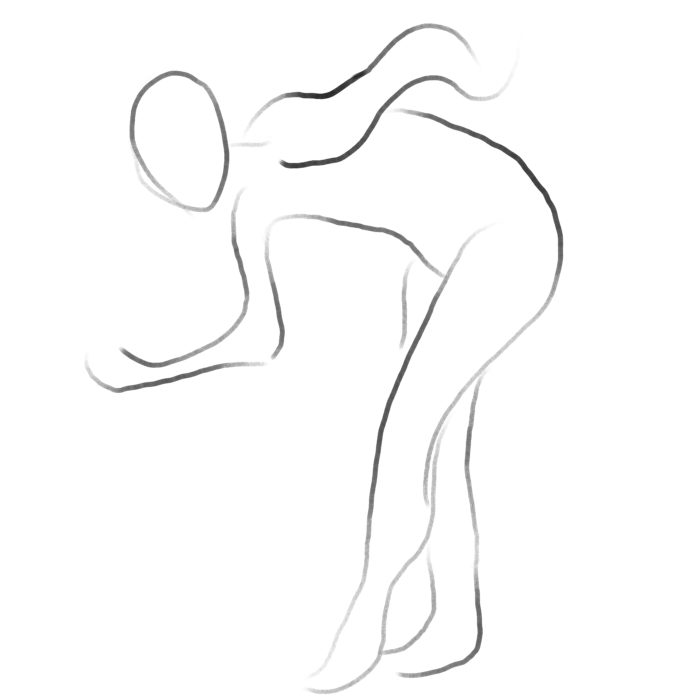
Figure drawing is a drawing of the human body in any of its many postures. You can draw as many details as you want, but like with any drawing, you start with a simple sketch. The idea of this drawing activity is to make highly expressive sketches of the human body to improve your focus skills.
Artistic creations have many health benefits. One of its most important rewards is the ability to help your mind focus on what is in front of it. In other words, when you are creating something artistic, you are in a meditative state where you focus solely on one task.
For you to achieve that state, you must give yourself permission to engage completely in that activity. The more engaging and the more absorbing the activity is, the more you will achieve that mindful state where your inner voices become silent.

I propose the following exercise where you will focus solely on what is in front of you. You are going to visualize lines going one way or another, and as a result, you will also focus on succeeding projects.
The fact that you are making an activity that forces you to concentrate, trains your willpower, and your ability to complete tasks. To clarify, the activity of figure drawing to improve your mental focus serves as an exercise to train your mind. If you want to read other ways on how to train your willpower, you can read here.
Use Artistic Activities to Focus with Compassion
While I was reading about mental focus I found this article, and I hated most of it. It’s about improving your focus to be successful at work. First, the need to define success as having money is something I find despicable. I don’t think that being successful is a purpose in life. I also truly believe that success is subjective and that the possessions that society is trying to impose on us are completely detestable. To me, success is being tranquil. I would never feel happy if I live by someone else’s standards of what they consider my life should look like.
Anyway, I don’t believe that there is a recipe for success. Nor do I think that you should treat yourself as a robot. Tricks like intermittent fasting, or drinking herbs to stimulate your brain, could be taking yourself almost to the limit of a collapse. You never know what repercussions it could have in the long term. Also, by all means, I think you should listen to your body and you should live your life taking care of yourself both mentally and physically.

Also, I truly believe that you should treat yourself with compassion and love. Most importantly, I think that by incorporating art into your life, you can help your soul speak. Therefore, providing yourself with the capacity to listen to your sensitive soul. You should live a life with art, and you should look for activities to live a peaceful and meaningful life.
What is mental focus and why it’s important?
Mental focus refers to the capacity you have of directing your mental effort to what is relevant at the moment. That is to say, if you want to work on a task for a certain amount of time, you are capable of doing it without directing your mind towards other activities.
It’s important to recognize when you need or want to focus on something completely. Most importantly, it’s important to be able to control your attention to seize every one of your experiences.
For instance, you can inspire your creativity with some mental wandering. Moreover, you are in the capacity to commit to a certain amount of time to savor every experience. Later on, you will use that insight to continue with your innovation. You will be able to write the ideas that arose and you will have the capacity of doing them more precisely.
Don’t improve your focus only on work-related tasks. Do it for yourself, and for every aspect that you commit to. You will feel fulfilled with an inner feeling of accomplishment.
Figure Drawing Practice
Think of this activity as a source of inspiration and training. Doodling helps the mind concentrate and motivate. You can doodle while listening to a conference or while in a meeting. It helps the mind stay active and surprisingly, you are more engaged with what is in front of you. It turns out that when you doodle more parts of your brain become present than when you only try to listen as an obligation.
I propose that instead of doodling while in a lecture, prior to it, you take part in a figure drawing practice. This will improve your focus on the long term because you are training your mind to pay attention to details. Drawing trains your mind to see clearly and to be more present. What if you sketch figure drawing for an amount of time to improve your focus?

Figure drawing is an exciting practice because you can do it for as little as one minute per posture up to hours and hours of drawing every detail. Also, there are almost infinite postures that you can try without thinking that you are repeating them.
The Process of Figure Drawing to Improve Focus
Think about how much time you’ve got for the exercise and look for practices of that length. Also, you can commit to at least 10 minutes a day to do it. There are a lot of web pages where you can find inspiration. But, I want to show you my favorite ones where you can choose the posture. Also, you can find real-time posturing models to make the practice feel a lot more inspiring.
Here are the sources I use for figure drawing to improve focus. I choose them depending on how much time I’ve got and/or my preference for the day.
- Croquis Cafe
Good quality real-time videos. Sessions of less than 30 minutes with 1, 2, and 5-minute postures. They are great to feel inspired because it gives you the feeling of a true figure drawing master class. - Quick poses
Timed practice where you can choose what you want to draw. You can choose the interval between sessions, and how many you want to draw. You can even get a certificate for completing sessions. - Line of Action
You can choose between an interval or class mode. It’s a great site to practice proportions because they have models of different ages. - New Masters Academy
It has some good videos if you want something longer than the Croquis Cafe.

Simple Steps of Figure Drawing for Beginners
Here are some tips I use to make figure drawing to improve focus. I want to show you what works for me. Full disclosure, probably you have seen these before. I like a minimal style because what I am trying to look for is some inspiration, not perfection. Many artists even make 15 seconds sketches in a fast and evocative manner! I love this page for quick poses.
For this exercise consider a maximum of 5 minutes per pose. You want to capture shapes that stimulate your brain but that don’t overwhelm you. Don’t focus on shadows or too much detail. After all, this is an exercise that will help train your mind. If you pay too much attention to details you will create something beautiful, but you might probably lose interest in doing it every day. Consider fast shapes that engage your mind in producing a simple but artistic sketch.
Some steps that might help you
1. Time
Keep the size of the body proportional to the interval time you have chosen. For 15 seconds’ intervals make small figures, for 5-minute intervals, consider bigger sizes.

2. Motion
Analyze the body as a whole. Draw a line that represents the full motion of the body. This is known as the line of action. It is the one that represents the body as a whole. Usually, from the head to the furthest toe. Or, from north to south or east to west.

3. Torso
Draw the torso. I think this is the main structure of the body. If it is a woman accentuate the waist and hips, and if it is a man I accentuate the shoulders.

4. Legs and arms
Make simple shapes that go along the central line for the legs and arms. Usually, these shapes are no more than the shape of the letter s. Keep it simple, less is more.

Enjoy and go with the flow. When you finish the activity you will have a very interesting page full of tiny people dancing.

Some Variations From the Initial Sketch
If you want to dig further into the experience, or you want to do something freely, consider the following variations to the experience.
1. Use different colors
Use your favorite color, or pick any color you want and later analyze why you chose that color.

2. Exaggerate or understate
Play with the curves that define the posture. Have fun with the sketch and make the figure drawing thinner or thicker. Play with the shapes and exaggerate the curves. It is an interesting variation to consider.

3. Imagine a shield
Draw a shield on top of the torso. After drawing the torso imagine that the model is wearing a shield. Imagine that you are protecting the model as you would protect yourself. It is a gratifying experience.

4. Add elements or doodle with the figure
Add or subtract elements. For example, draw surreal objects. Imagine the model standing on top of a chair, or draw a long beautiful hair.

Art as a Source of Inspiration and Discipline
If you practice figure drawing to improve your focus every day, you will notice its benefits. Not only artistically, but you will notice how you improve your mental focus. You will gain discipline and self-awareness. Also, I find it amazing that beautiful visual creations trigger your brain’s reward pathways. I believe that all artistic creations are valuable. Creations don’t depend on your artistic level and above all, you should have a life full of art.
Certainly, the importance is that you find inspiration in this exercise and that you gain some focus. If you feel that you want to add a lot more details to your drawing look at this page. It has an amazing tutorial on how to draw both men and women with a lot of detail.
How to Find Motivation by Drawing
Motivation is the desire to work on tasks. It depends both on internal and external factors. You can learn to manage that desire by knowing yourself better. Learn how to find motivation by drawing. Above all, make the most out of objects you can rely on like a piece of paper and a pen. With this trick, you will observe and enhance your motivation.
Many times we don’t feel inspired to work on things, and that is ok. After all, we are not machines and there are moments when we feel more encouraged than others. For this reason, it is important to observe your behavior. As a result, you will take advantage of those moments of inspiration, when everything just clicks.
When you do this, you cherish those moments of motivation. You work towards a goal that you can achieve. The rest of the time you can do things that don’t require too much concentration. Also, you can do things that don’t have a deadline or even waste your time. It is perfectly fine to sit still or sing.
Time you enjoy wasting was not wasted
John Lennon
Look at these artists’ routines (I keep looking at these, it’s fascinating). They observed and discovered what worked for them. You can create your own source of motivation merely by observing. In this post, I propose a way of finding and cultivating motivation by using art, particularly by drawing. Discover how you can find motivation by drawing.
Paper and something to write with
How to find motivation by drawing relies on the powerful technique of visualization. You recognize what you want to accomplish, you break it down, and then you do it. By accomplishing tasks, you start to gain momentum and you develop your willpower.

Use a notebook, and draw things to have a clearer picture of how you can find motivation. Use this notebook to draw the items of the following list.
- Begin: the hardest thing is to start.
- Focus on the things you can control.
- Imagine the place you envision for inspiration.
- List possible distractions.
- Draw to disconnect, rest, and recharge your motivation.
The key is to start small and start building your willpower. As a result, you do it automatically and you feel fulfilled with what you have accomplished. You can train your willpower as you do with your muscles. However, you don’t want to overdo it like you wouldn’t with your body.
What we all need is the satisfaction of this little uplift that we get psychologically from finishing something.
Joyce Carol Oates
1. Start
The first step is always the hardest. Imagine for example, when you need to clean your house. You think about it and you don’t want to do it. The more you think, the more you get away from achieving a fresh house. As soon as you start doing it, you just do it and then finish.
If you think about it, the hardest part was beginning, not cleaning the house. The same happens with exercise, and things that you have to do.
This works as well for motivation many times. Don’t expect to always feel like doing it. You have sometimes to push yourself to do it. Also, if you train your willpower, it will get easier with time.
Just do it
Sit and start doodling to feel that initial push. When you need to start working on something and you don’t feel like it, start doodling.

According to this article, when you doodle you are possibly finding pieces of lost information. Your brain is activating parts that were in your subconscious and you start using them for your own benefit. These parts many times are the fire to ignite your motivation.
I like doodling with ink, with a wet pen. If I don’t know what to draw, I draw an object that is on my desk repeatedly. Usually, I draw the same plant every day. This way I activate my imagination. Consequently, I have a fresh perspective on the things that I want to work on.
2. Notice the things you can control
a. Paint dumpster of feelings that don’t have use
Scribble hard or soft, what works for you to calm yourself. Sometimes, you lack motivation because you are afraid, or you have imagined things to be difficult. You are anxious because they are things you can’t control. Get rid of this anxiety and doubt by scribbling on a piece of paper. Focus instead on the things that are in front of you. For instance, focus on the things that are happening right now.

b. What you control, envision superpowers
Draw the things that you know you can control. For example, how much time you can work on a certain project. Also, think about your strengths and draw them. Think about the things that you like and fill yourself with positive affirmations. According to this study, if you draw things that make you happy, you will have a mood enhancement. Consequently, you will feel motivated.
Focus on the things that are real and the ones you control. As a result, you can start to envision a plan for the things you want to accomplish. Draw that plan, step by step. Visualization works when you have a plan for each step you need to take to fulfill your goal. Therefore, draw each step and visualize clearly how you want to accomplish them.

Draw the things that you need to do in conjunction with the things that make you happy. You will have a clearer picture of your goals, and you will also feel good about starting them.
3. The place where you work
When you draw the place where you work, you could have a clearer picture of what you like. For instance, you will notice how you can be more concentrated and motivated. That is to say, picture yourself working and think of the things that surround you. Do you like what you see? How do you feel about certain objects?
You could think about how you feel towards certain objects. For instance, whether or not they help you concentrate or drive you away from motivation. For example, I like a clean space to work. All I have on my desk are a few plants, a candle, notebooks to sketch, and something to drink. I like having coffee in the morning, tea after lunch, and the rest of the day I just drink water.

I drew all the things that I previously had on my desk. While I was doing the exercise, I discovered how I felt towards certain objects. For example, I used to have a lot of books, and while I was drawing them I felt anxious. As a result, I knew that I didn’t like them. It was a constant reminder of a lot of information.
Therefore, I really enjoyed the process of painting my working space. I discovered what I really like. Most importantly, by being creative, that is to say, drawing, I discovered how I find motivation.
Never underestimate the power of drawing objects. I drew chairs and discovered that I like reading on the couch. It sounds simple, but I always thought that I needed to sit on my desk to highlight while I read. When I drew the couch, I visualized reading on it. It turns out I concentrate and enjoy my books easily on the couch.

To clarify, get in touch with your creative persona to discover how to find motivation. You can do this by drawing and observing how you feel during the process.
4. Possible distractions
Think of possible distractions that may arise. It’s quite beneficial to prepare and to visualize possible distractions. It is good to have a plan, and the more detailed and broken down, the better.
Drawing distractions that may arise could show you a clearer path on how to find motivation. You will have a better notion of your purpose, and you will prioritize your decisions. For instance, a possible distraction could be the noise from people you work with (individuals with cups of coffee). Don’t pay attention to the conversations, let it become white noise to avoid losing your motivation (sum of the cups).

For example, I used to think that I could just put my cell phone on discrete to avoid distractions. It wasn’t the case. I constantly reached for it to check just for a few seconds whether or not I had received a message. When I drew the distraction, I knew I had to put it in a different room from where I was.
Certainly many times it is better to draw things because you use your ability to visualize outcomes. Consequently, you have a clearer picture of how to find motivation.
First, have a definite, clear, practical ideal; a goal, an objective. Second, have the necessary means to achieve your ends: wisdom, money, materials, and methods. Third, adjust all your means to that end.
Aristotle
5. Rest
Journaling before going to sleep is a great way to get free from all the thoughts from the day. The piece of paper collects your thoughts so you don’t have to think through them during the night. Consequently, you can work on them the next day. You don’t lose information because you placed it on paper.
The same happens when you draw. You make a rough sketch of everything in your mind. Don’t try to make a beautiful drawing because it can be counterproductive. That is to say, your mind will engage in the process of drawing. As a result, you won’t think about your ideas, but the drawing itself.
The best thing you can do is draw a rough sketch and disconnect from the day. You can use this tool to help your unconscious mind come up with a solution while you sleep. The beauty of drawing instead of writing is that your mind could visualize solutions in the process. Also, you remember better your drawings than your words. As a result, you are helping your subconscious work through the night while you rest.
Also, you could use scribbles as a breathing exercise to ground you in the present. I scribble while I breathe and code my todo list in the shape of a pizza. This way, I remember the six more important things for the next day.

Drawing is the answer
Stop thinking you can’t draw: everybody knows how to. You can observe and make your own interpretations. To convince yourself further, read this interview. Dan Roam wrote The Back of the Napkin, a book about solving problems with pictures.
When you add pictures, you add layers and dimensions of thought that are almost impossible to achieve with words alone.
Dan Roam
Start doodling, sketching, scribbling, drawing, whatever you feel like doing. Enjoy the process and savor the way you find motivation with pictures.
Do you have a creative method to find motivation? Please comment below.
Memorable Mantras to Triumph in Uncertain Times
What are mantras?
Mantras are repetitive sounds that increase concentration. The use of mantras for uncertain times is a great tool that can be used anywhere. Their purpose is to ground you in the present. You can do this by using a positive affirmation or a sound considered as a neutral object.
The meaning of the word is a tool for the mind:
manas (mind) and tra (tool)
Why do mantras work?
Mantras help you create awareness of the present. You are getting in tune with a purpose, with the state of mind you want to achieve. When using mantras for uncertain times, you anchor in what you have control of. That is, only on what is going on at the moment. Uncertainty is something in the future, something that most likely doesn’t depend on you. However, a repetitive sound has the power to relax and to help you cope better with different stressors.
Your brain produces endorphins as mentioned in this study from the Harvard Medical School. They call the repeating of a mantra as an exercise for the mind. The importance is to repeat a sound because this act focuses your attention on a detached expression. Thus, restricting your mind from external thoughts. This and several more studies conclude that mantras improve the clarity of the mind.
Grey matter increases with the use of mantras. For instance, your cognitive functions increase. In other words, you expand mental processes that allow you to carry different tasks. You elevate your consciousness and more easily anchor in the present.

Remember, art enhances your brain plasticity, thus making you flexible to adapt to new and many times uncertain situations. Mantras are art because you are interpreting sounds either composed by you or someone else. The art of making sounds or music is what mantras are all about.
Mantras have psychological powers just as mindfulness. Because you are repeating a word or a chant many times, your brain disables other thoughts from interrupting you. This is why mantras for uncertain times are a great tool. They don’t necessarily have to have a meaning. They are just a repeated sound that engages your brain and disconnects you from the outside world.
Why is this helpful?
Well, because sometimes you need to disconnect from things to gain a better perspective. You can achieve this by focusing on a repetitive sound that you start to dominate. You are good at making that sound! It is a melody that you repeat over and over. Because you know the notes and/or the words, you want to be a part of it.
It is like singing along a song you know, knowing that is helping you because you focus on an intention.
Now, let’s see the many ways you can create a mantra. Most importantly, enhance your musical persona and enjoy your ability to create a composition.
Ways of making mantras with sound
All the ways mentioned below are great to ground you in the present. Focus on the creation, and remember that mantras will be your companion through uncertain times. You have to create a pattern that you can easily repeat. While repeating it, let your mind engage with the sound. Repeat, and repeat that pattern for some time. You have to focus your attention on the sound. Don’t force yourself to concentrate, you will naturally transition into a state of awareness. If you feel distracted, gently allow yourself to go back to the sound of the mantra. Savor the process of the creation. Later on, of the state of mindfulness that the mantra helped you be in.
1. Percussion
Create a repetitive percussive sound using anything that you have at hand. For instance, it can be a pen hitting a desk, the sound of you clapping, palatal clicks with your tongue. Just anything that you want that reminds you of an intention. If you have a drum set at home, by all means, use it. Repeat a rhythm that you can easily interpret.

Learn to play the cabasa here.
2. Air or your voice
Breathe in and every time you breathe out chant the same note. Also, while you breathe out try to whistle the same note as if you were chanting. You can also incorporate your teeth and produce an ssss sound with them. Have you tried whispering a song? It is so refreshing and you feel the power inside you. The fact that you have yourself no matter the circumstances, is a great thought of empowerment. Also, if you have a wood instrument repeat a pattern of notes over and over again.

Create your composition and take advantage of your voice. That is to say, concentrate on the way it produces sound, and enjoy the vibrations in your entire body.
3. Strings
You need an instrument for this type of mantra. If you have one, you probably know how to play a few chords. This creation aims to repeat a succession of chords. The simplest way is to repeat the following musical chords: tonic and dominant (I-V). You can also create your composition as long as it is just a maximum of four chords. Enjoy the moment without needing to concentrate so much on placing your fingers right. You are looking to create a mantra, not a song.
Also, you can create a mantra with just words, not music at all. This list has simple mantras for anxiety that you can easily incorporate.

If you want to try traditional mantras look at this site. For example, it has a list of amazing mantras to work on and memorize.
How to use the mantra
Here are my tips for creating your personal space. Take advantage of the mantras for uncertain times that you created previously.
- Sit in a comfortable position where you can breathe easily.
- Find a reason to anchor.
- Interpret the mantra you created.
- Focus your attention completely on the repetition.
- Repeat this mantra every day. Consistency is key to see the results.

Ways of making mantras visually
Mantras are a great tool to incorporate in uncertain times, or when you are nervous or stressed about the future. After all, there is nothing you can do about it. The best thing you can do, the only thing you have control of, is the present moment. That’s why you should interpret a mantra especially when you have no control over what is going to happen. Rest your mind on a composition and focus on positive creations, rather than on useless thoughts.
When you repeat a sound your brain engages with the creation. What if you try to repeat a pattern visually? Why not try and draw a simple figure that you can repeat over and over again and create a pattern?
1. Circles, squares or triangles
Draw a geometric figure and repeat the motion of your hand over and over again. You can also draw a spiral that goes inward or outward in the shape you chose. Don’t focus too much on making it perfect. That is to say, remember that as with a repetitive sound, the aim is to not think about the process. It’s to enjoy the way your mind engages in the creation without you noticing it.

2. Create your shape
As with geometric figures, you can also draw any abstract form that you can repeat over and over again. Don’t make it too complicated and just repeat.

3. Experience with materials
Use different materials for the composition. You can start with watercolors and later on switch to ink, just discover and play with the material. Notice which material is more natural to you. Consequently, your mind engages more easily and you have to be less aware of the motion you are making. As always, the purpose is to be engaged and not to think.

What do you think of a visual concept of mantras?
Listen to it. How do you feel? Can you sing along this simple melody? When you repeat it for a while, do you feel different?
Leave your comments below and tell me what you think of mantras.
Do you have any other tips?
Capture Your Creativity With a Notebook Like the Great da Vinci
Everywhere you are you think. Either all of your ideas and thoughts are worth keeping or are things you need to process. This is why you should carry a notebook like Leonardo da Vinci to embrace your creativity.
If your thoughts are great ideas or something artistic, you want to remember it later. By all means, write them down. If you are thinking about your life, how to organize better, or how to change a pattern, write. You should write everything down to have a better perspective.
The result of writing things is to have a better viewpoint for resolving them. For example, you can observe your activities through time. You can address things and think about whether or not they are worth your time.
The greatest deception men suffer is from their own opinions.
Leonardo da Vinci
You can also use the notebook as a way to declutter your mind. If you have a project in mind, put it on paper and you can deal with it later. Also, you can work on a plan to come up with a solution.
Stop ruminating over thoughts, write instead in your notebook. Using tools like brainstorming, timelines, delegating, managing appointments, make your mind less crowded.

This study shows why you should carry a notebook. The main conclusion of the study shows that being reflective of our performance enhances confidence. For this reason, you want to carry a notebook like da Vinci to improve the quality of your thoughts. Most importantly, you will cherish the only thing you control: your mind.
Look at the following six ways (inspired by Leonardo da Vinci) you can fill a notebook to convince yourself even more.
It’s easier to resist at the beginning than at the end.
Leonardo da Vinci
How to enhance your creativity carrying a notebook all the time
- Study and learn
- Draw or paint
- Create a coding system
- Observe, analyze the world
- Dedicate some time to review your life
- Set goals, dream big
1. Study and learn
You can start to learn a new language or you can write in your notebook in any language you want. For example, use your imagination and incorporate words in other languages to your daily annotations.
Learning never exhausts the mind.
Leonardo da Vinci
Also, you can combine drawings with words in other languages and you will create your visual dictionary. All this, while you practice your drawing abilities.
Try this exercise using one of da Vinci’s drawings: the bell. Look at the bell and write all the words that come to your mind about it. Think about the mechanism, the sound, the material, where it is placed, etc.

Write the words in various languages and notice similarities and differences between the languages. For example, are there languages that employ the same word?
You can also learn about things that you are passionate about. Because you are carrying a notebook like da Vinci, there will be many opportunities to study your notes. Also, you can add things that come up that you want to research further.
2. Embrace the functions of the eye
Painting embraces all the ten functions of the eye; that is to say, darkness, light, body and colour, shape and location, distance and closeness, motion and rest.
Leonardo da Vinci
When you draw or paint you are being mindful. Science proves that art is good for you. Now, all you have to do is choose what you want to draw or paint. In other words, grab your notebook and start a wonderful creative process by inspiring yourself with all the objects around you.

As da Vinci mentioned, you embrace ten functions of your eye and you start observing with a critical eye. Above all, you will be aware of the things around you, thus develop a mindful mindset.
3. A unique diary
A lot of people believe that da Vinci was messy. But, it could also mean he had a unique system of taking notes. He valued his thoughts and not the way they were written.
For example, you could see a grocery shopping list next to a drawing of the human body. That was what was on his mind at the time. You can recognize that because he wrote the grocery list. He didn’t have to think anymore about what he needed to buy. This allowed him to concentrate solely on the study of the human body.
He also invented new words and used shorthand symbols. That is because he was making the notebooks for him and not for others. That also explains why he used mirror writing. He wasn’t trying to protect his work, he was making it more comfortable for him to write. It is believed he was left-handed. Mirror writing prevented him from touching the ink with his hand while writing.

If he would have wanted to protect his work, he definitely would have invented his language. Certainly, his intelligence is never been questioned.
Taking da Vinci’s example, you can create your coding system for a notebook. Also, you could invent symbols or write distinctively. Doing this will take your imagination further motivating you to have a creative mindset. Doing so will benefit you mentally in a tremendous way.
4. Observe and immerse in the world
Learn how to see. Realize that everything connects to everything else.
Leonardo da Vinci
Just as you can draw or paint, you should reflect and write next to your drawings. For instance, the notebook you carry like da Vinci is the best companion for this.
Observe what is going on in the world, what you can do about it. You might realize that you control almost nothing. To clarify, the one thing you control is your thoughts.
Reflecting on the world, on human behavior, has the powerful ability to enhance your emotional intelligence. You start to question the importance of things and start to build empathy and care about other living things.
Being selfish is not a pleasant feeling to cultivate. Caring about others and what you can do for the world has the power to fulfill you emotionally.
5. Review your life
There are three classes of people: those who see. Those who see when they are shown. Those who do not see.
Leonardo da Vinci
You want to be the person who sees. The person that observes his or her life. Remember that reflecting on your life and your surroundings is a healthy habit because you learn from your mistakes. It helps you cultivate gratitude, and it helps you gain perspective over the importance of your thoughts.

You will reflect on your actions and what you could change in the future. This will make you a more thoughtful person and more comfortable with your self.
Within the notebook, you carry like da Vinci, reflect on the way you want to live your life. Make note of the things that bother you and make you happy. Next time you are tempted to do something you don’t like, you will think twice before doing it.
For example, look at how people who lost weight succeed more by writing everything they ate in a day. It is a form of reflection. One that helps you be aware of the things that harm you or make you fit.
6. Set goals, dream big
Life is pretty simple: You do some stuff. Most fails. Some works. You do more of what works. If it works big, others quickly copy it. Then you do something else. The trick is the doing something else.
Leonardo da Vinci
This article explains why writing your goals makes you more prone to succeed. It turns out, that if you write down your goals and expectations you are more aware of them. Consciously you develop the ability to work towards achieving your expectations.
You direct your energy and time towards the things you want to accomplish when you carry a notebook. Write down and look every day at your goals. As a consequence, you will succeed in your expectations.

Don’t live your life expecting things, that is the best advice you can receive. Live your life in the present and work towards your well being. Be aware of your thoughts and of the things you can control. Direct your life and attention to the things that matter, for example, towards your tranquility and peace of mind.
Above all, the objective of the notebook is to write things so your mind will be present. Don’t expect to achieve your dreams and goals to be happy, you will never feel fulfilled. Carry a notebook like da Vinci to reflect. Be grateful and cultivate the one thing that matters: your mind and your choices.
Read more quotes here.
Read more about the notebooks and other resources here.
How to Practice Gratitude With Trees and Art
According to the Harvard medical school, gratitude helps people feel more positive emotions, relish good experiences, improve their health, deal with adversity, and build strong relationships. For instance, in this activity, you can practice gratitude with trees and art.
It sounds crazy and you might be laughing, but read further to understand what all this is about. This article states that by being around trees you are less likely to have psychological distress. Also, this article enhances the importance of art used therapeutically. Now, why not combine both of them?
Look at trees that are everywhere and are admirable. Certainly, they remind you that you need to go one step at a time to grow and become strong. Look at the trees, pick one, and find a comfortable spot to start drawing it with an attitude of gratitude.
This activity helps you be more grateful by analyzing and focusing on all the things that make up a tree. Also, you can relate them personally with the things that constitute your life. Practicing gratitude brings joy to your life and helps you focus on the positive rather than the negative aspects.

The activity aims to let your imagination flow. Don’t judge yourself and be present with the things that surround you. Focus on the tree that is in front of you.
Use the tree to be grateful by breaking down its parts:
- The bark, your structure.
- The branches, your traits.
- The leaves, your beauty, and how you learn from others.
- Oxygen, what you give others
1. The Bark of the Tree
Start by looking at the tree and admiring its bark. How dark or light is its color? Brown, grey, or yellow? Is the bark broke or peeling? If so, is it vertically or horizontally? Into strips or scales? Realize that the bark is protecting the tree, it is carrying a life inside of it. Do you want to know more about branches? Look at this page.
Now it is time to use these observations and make an analogy with your life. Think in positive terms and bring gratefulness to the experience. You are grateful because trees exist. You might as well be grateful for the things in your life that represent your bark.
What is your bark? How do you protect and embrace yourself every day?
You are strong because you are at this moment doing this activity. What brought you here? You are an ambitious person because you take care of yourself. Moreover, you look for answers and activities that nurture you.

What do you admire about yourself? Think of that voice that pushes you forward. Your desire to be alive, present, and at peace, that is a great place to start. The bark is that strength that supports you and reminds you that your strength is within you. Appreciate this thought, the fact that trees remind you to be grateful for what you are. Therefore, practice gratitude with the trees now with art. Start painting with this thought in mind.
Start Drawing
Choose a color. For example, do you want your tree to be lifelike or something created from your imagination? Pick any color, it is up to you, and depending on how you are feeling at the moment.
Now, paint the bark with the color you chose. While you are doing it, remind yourself of what you consider to be your bark. You can even make the tree with the words that arise. Those words that remind you of your strengths, the things that push you forward. It can be as simple as, I just want to eat or feel better. Also, words like, I am going to conquer the world.
Anything that works for you. The fact that you want to be at peace is enough. Use that to realize that you always want what is best for you, and that is valuable.
2. The Branches of the Tree
Look at the branches of the tree and analyze how they arise. Do they come from a bigger branch or are they carrying smaller ones with it? Moreover, do branches arise upwards, downwards, or are they growing in all directions?
Are the colors of the branches similar or the same as each other? Is the color of the branch related to that of the bark? Above all, do they have leaves or is it perhaps winter and they have lost all of them? Do the branches carry fruits or flowers? If not, do you wish they did?
With these observations consider the branches to be your traits. What makes you who you are?
You have your personality and many traits inside you are valuable. Do you admire yourself intellectually, physically, the way you treat others, or your principles? These are all things that constitute you. As a result, they are your branches. Now, it’s time to write them down and be grateful for all that you have.
You are beautiful the way you are
Remember that this is just an activity for you to practice gratitude with trees and art. This activity aims to help you be grateful for what you have. Don’t be judgmental, you are who you are and that is beautiful.
As with the tree, for example, you could wish it had flowers or some fruits. Just consider this affirmation: everything is as it should be.
Why is that? Because the tree is not producing fruits or flowers at the moment because perhaps it’s winter.
The tree perhaps will never do because its purpose is to give shadow to other living things. For example, the kapok tree. Just look at this beauty.

Apparently, the tree doesn’t do anything at all for you. But why if you could ask a bird, what would it say?
It’s the same with you. You may not know why you are in this world, or may not appreciate some of your virtues. But remember that you are like this for a reason.
Practice gratitude with trees expressing artistically your virtues
Paint the branches again however you want, just observe and represent them however you want.
Branches of a tree originate periodically and beautiful patterns emerge. Therefore, be aware of that and make your representation of trees using repeated and aleatory shapes.
Everything is valid and remember again, it’s not about the outcome but the process itself.
The process of sitting down, looking at the tree, analyzing everything it has, and making the same with you.

Practice gratitude using the observation of trees and expressing through art. All that you are and everything that makes you, you. Don’t label things good or bad, certainly, you wouldn’t do that to a tree.
3. The leaves of the tree
It’s very interesting to look at all the leaves and realize that there are not even two the same. Also, it’s amazing to look at all the different colors that constitute them. You could just say green or bear in mind that each green is different. Similarly, observe that some leaves have spots, others have holes. Some leaves are brown, and some are ready to fall and give its place to a new leaf. Thus, when it falls to the ground, it provides its nutrients to the soil.

It is just stunning, and as Queen put it better in one of their songs, The Miracle:
If every leaf on every tree
could tell a story that would be a miracle.
Queen
The miracle comes from them, but thanks to the sun. They need the sun as much as we need the trees. Think about how you learn from others, and how others in your life shape the way you are. Also, you are what you surround yourself with, so look for positive, heartwarming, beautiful experiences. Think about what you put in your body, warm sun, and enriching rain? Or chemicals and things that are drying up your leaves?

Mindfulness with the leaves of a tree
This activity aims for you to be mindful.
(Read here to dig further on other art activities to be mindful.)
You can do it in one of two ways:
- Looking at the tree in front of you and painting the color of the leaves. You can also paint how you would like the tree to be. The main objective is to be present with the colors and let yourself express.
- Paint leaves with a color palette and associate feelings with specific colors. Consider for example this color palette. How can you represent your thoughts and feelings at this moment with it? You can also create your color palette and color code feelings. The activity here is to use the colors to let go of your worries. Thoughts and feelings are less of a burden when you can have different perspectives on them. You have created a map of the things that are currently in your mind.

4. Leaves produce oxygen
Looking at the leaves think of this powerful thing: they produce oxygen for free to every living creature on earth. Trees sustain your life, and you sustain theirs as well because you give them carbon dioxide. That is a powerful feeling. You depend on trees as much as they depend on you. Practice your gratitude acknowledging the importance of trees with the use of art.
Noticing this flow of oxygen makes you aware of breathing. Consequently, it makes you be in the present and be conscious to calm down, to be mindful.
Animals coexist in harmony with trees. On the other hand, we are just beginning to take care of them. You can pass this feeling of gratitude.

With that in mind consider what you are willing to do for others. Also, consider what you have already done for others expecting nothing in return. For example, by smiling you are brightening up someone’s day and yours as well.
Did you know that if you smile your brain assumes things are ok? As a result, if you smile constantly you can make your brain produce happy thoughts?
Look at this book if you want to read further.
Give others and express gratitude
Think about what you can do for others. Most importantly, take care of the trees for everything they have done for us. You should recycle, reuse, or pick trash in a park. Doing things for others elevates your endorphins, and gives you a feeling of accomplishment. Besides, you will be helping the environment.
You can paint oxygen as well if you want. Imagine the air going round and round with the leaves. For example, imagine autumn, the colors, how it interacts with nature. Also, pay attention to the air, what sound does it make? Is it bringing you calmness or are you cold?
Keep busy with survival. Imitate the trees. Learn to lose in order to recover, and remember that nothing stays the same for long, not even pain, psychic pain.
Sit it out. Let it all pass. Let it go.
May Sarton
Be present, be thankful, and enjoy this experience.
If you want a different activity you can do this one.
Leave comments in the section below for your insights. How was your activity? How do you feel after looking or painting trees?